
5 Bizarre Physics Facts That Make Curling Awesome
Why sliding stones on ice is secretly the world's coolest science experiment.
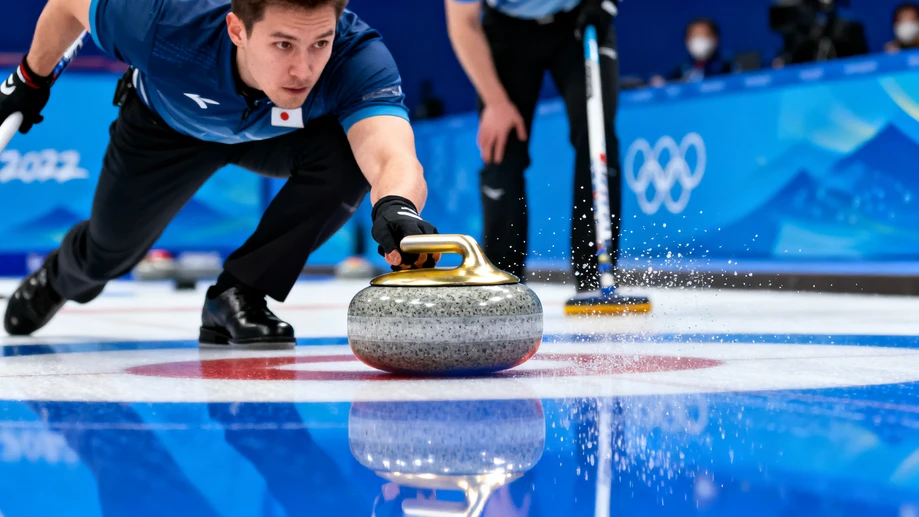
Imagine pushing a 40-pound granite stone down a sheet of ice, then frantically sweeping the path in front of it with brooms, while teammates yell instructions that sound like a secret code. Welcome to curling, the winter sport that looks like housekeeping on ice but is actually a masterclass in applied physics, strategy, and nerve-wracking precision. Forget brute strength; this is a game where finesse, geometry, and understanding ice on a microscopic level reign supreme. It’s often called "chess on ice," but that undersells the sheer, weird physical phenomena at play every single slide.
The most head-scratching moment for newbies? The stone's curl itself. You push it straight, but it gracefully arcs sideways as it slows. This isn't magic; it's friction and rotation in a delicate dance. As the stone glides, its bottom edge, slightly concave like a very shallow teacup, spins. The leading edge of this spinning stone scrapes ever-so-slightly against microscopic bumps on the ice pebble, creating more friction than the trailing edge. This tiny difference in friction forces pulls the stone sideways, causing its elegant curve. The direction of spin dictates the curl direction – a clockwise spin makes it curl right, counter-clockwise left. Mastering this curl is the soul of the game, allowing players to bend shots around obstacles like a slow-motion wizard.
Then there's the frantic sweeping. Why sweep? It's not just about cleaning the ice. The vigorous action of the corn or synthetic broom head rubbing the ice generates friction heat. This intense heat, concentrated in a split second, melts the very top layer of the ice pebble, creating a microscopic, fleeting layer of water. This nano-lubrication reduces friction between the stone and the ice just where the sweeper is working. Less friction means the stone travels farther and, crucially, curls *less*. Sweepers aren't janitors; they're temporary ice alchemists, strategically altering the ice's friction coefficient to extend the stone's journey or straighten its path, all based on the skip's shouted commands.
The ice itself is a marvel of engineering. It's not a smooth hockey rink. Before play, technicians spray fine droplets of water onto the cold surface, creating a textured layer of tiny, frozen bumps called the "pebble." Think of it like a very fine layer of sugar grains frozen solid. This pebble is crucial. It reduces the initial friction when the stone is pushed, allowing it to glide. But as the stone slows and its weight presses down more effectively, the pebble's texture interacts dramatically with the stone's running band, influencing the curl. Maintaining consistent pebble throughout a game, as it gets worn down by stones and sweeping, is a constant battle for ice technicians.
Even the temperature matters immensely. The ideal "ice temperature" for elite curling is around 23°F (-5°C). Too cold, and the ice becomes brittle, the pebble gets damaged easily, and stones don't curl predictably. Too warm, and friction increases dramatically, stones slow down too fast, and sweeping becomes less effective as the melted water layer doesn't form properly or refreezes instantly. Top curlers and ice makers obsess over air temperature, humidity, and even the temperature gradient *through* the ice layer. Some teams even use laser thermometers to map the ice surface before crucial shots, hunting for subtle variations that could affect their stone's path. It’s a game played not just against the opponent, but against the very nature of the frozen water beneath their feet.
So, the next time you see curlers sliding stones and sweeping furiously, remember: you're witnessing a real-time physics demonstration. It’s hydrodynamics (that thin water layer!), tribology (the science of friction and wear), rotational mechanics, and thermodynamics all converging on a 150-foot sheet of meticulously prepared ice. The strategy is deep, the pressure is intense, and the physics is delightfully bizarre. It transforms a simple act – sliding a rock – into a captivating spectacle where understanding the invisible forces at play is the true path to victory. It’s not just a sport; it’s applied science with brooms and yelling, proving that sometimes, the most fascinating physics happens right under our feet, one carefully curled stone at a time.