
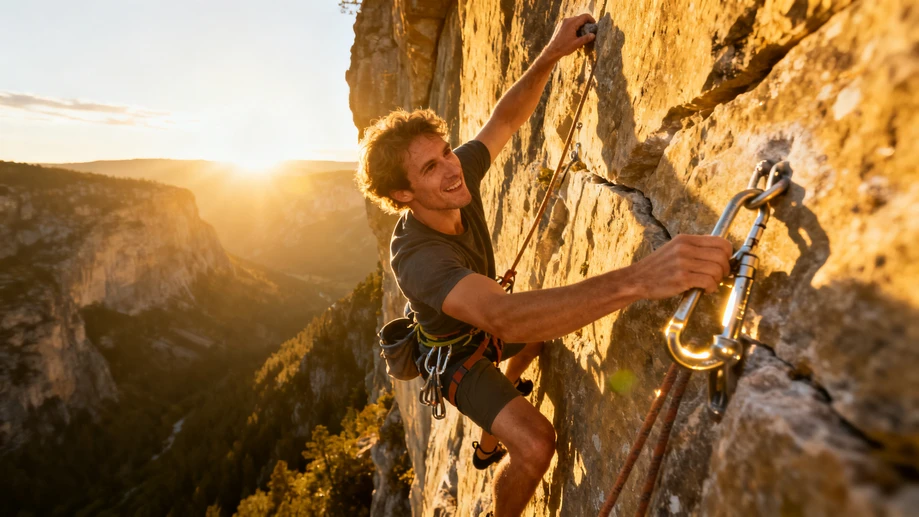
Discover the Thrilling World of Rock Climbing
Uncover the secrets of this adrenaline-pumping sport that’s more than just scaling walls.
Imagine standing at the base of a towering rock face, your heart pounding as you plot your next move—this is rock climbing, a sport that has exploded in popularity worldwide. It’s not just for daredevils; everyday people from all walks of life are flocking to indoor climbing gyms and outdoor crags, drawn by the blend of physical challenge and mental puzzle-solving. In the US alone, over 10 million enthusiasts now scale walls regularly, turning it into a social phenomenon where friendships are forged on the rocks. The appeal lies in its accessibility: you don’t need superhuman strength to start, just a willingness to push your limits. As you grip the holds and navigate the route, it’s like a real-life video game where every successful ascent brings a rush of triumph. This isn’t about conquering nature—it’s about discovering your own resilience in a fun, community-driven adventure.
Rock climbing’s roots stretch back centuries, evolving from practical mountaineering to the thrilling sport we know today. Ancient civilizations like the Greeks and Native Americans used climbing techniques for hunting and exploration, but it wasn’t until the late 19th century that it gained recreational status in Europe. Pioneers like Edward Whymper, who conquered the Matterhorn in 1865, turned it into a symbol of human endurance. Fast forward to the 1980s, and the invention of artificial climbing walls revolutionized the scene, making it safer and more inclusive. Now, with events like the Olympics featuring climbing since 2020, it’s gone mainstream. What’s fascinating is how it blends tradition with innovation—modern gear like harnesses and carabiners has cut accident rates by over 90%, yet the core thrill remains unchanged. It’s a sport where history whispers through every handhold, reminding us that scaling heights is as old as humanity itself.
Beyond the adrenaline, climbing offers incredible health perks that make it a smart choice for daily fitness. A single session works your entire body: your arms pull, your legs push, and your core stabilizes, burning up to 700 calories per hour—equivalent to a vigorous run. But it’s not just physical; studies show that the focus required reduces stress and boosts mental clarity, as climbers enter a “flow state” where worries fade. For instance, research from the University of Arizona found that regular climbers report 30% lower anxiety levels, thanks to the problem-solving aspect. Plus, it’s low-impact on joints, making it ideal for all ages. Picture this: you’re tackling a tricky boulder problem, and your brain is firing on all cylinders, strategizing moves while building confidence. It’s like a gym workout disguised as play, where the rewards include stronger muscles, sharper minds, and a natural high that lasts long after you’ve touched ground.
Dive into the diverse styles of climbing, and you’ll find something for every personality. Top-roping, where a rope secures you from above, is perfect for beginners seeking a safety net. Then there’s bouldering—short, intense routes without ropes—that’s all about power and creativity, often done on artificial walls indoors. For the adventurous, lead climbing involves clipping your own rope as you ascend, demanding precision and nerve. And don’t forget speed climbing, a heart-pounding race against the clock that debuted in the Olympics. Each type has its quirks: bouldering builds explosive strength in minutes, while trad climbing on natural rock requires placing your own gear for protection. The beauty is in the variety—you can start in a cozy gym on a rainy day or head to iconic spots like Yosemite for a weekend challenge. It’s a customizable sport where the only limit is your curiosity, and with apps like Mountain Project offering route maps, it’s easier than ever to explore.
Safety is paramount in climbing, but it’s surprisingly straightforward with the right know-how. Essential gear includes a harness, helmet, and dynamic rope designed to absorb falls, all tested to rigorous standards. Beginners should always learn from certified instructors, focusing on basics like belaying—the technique of controlling the rope for a partner. Common mistakes, like skipping knots or misplacing gear, are rare with proper training; in fact, indoor gyms have injury rates lower than soccer. The key is gradual progression: start with easy routes and build skills over time. Remember, it’s not about risk-taking but calculated fun—checking weather, using spotters in bouldering, and always climbing with a buddy. This emphasis on preparation turns potential danger into empowering confidence, making every climb a lesson in trust and teamwork.
So why not give rock climbing a try? It’s a sport that transforms ordinary days into extraordinary adventures, whether you’re in a local gym or a scenic canyon. The community is welcoming, with clubs and events fostering camaraderie, and the sense of achievement when you reach the top is unmatched. Start small—many gyms offer intro classes for under $20—and you might just find your new passion. After all, in a world full of screens, climbing reconnects you with the raw joy of movement and nature. It’s proof that sometimes, the best way forward is up.