
5 Surprising Secrets Your Local Sports Field Is Hiding From You
Uncover the Hidden Science Behind Every Bounce and Sprint
Ever watched a football game and wondered why that crucial pass seemed to skid just a little too fast, or why a tennis ball takes an unexpected hop? The answer isn't always the player's skill or the weather – often, it's the ground beneath their feet playing tricks, engineered with surprising science. Your local park pitch or community tennis court is a marvel of hidden technology, far more complex than just grass and dirt. It's a carefully orchestrated environment designed to influence the game in ways most spectators never consider, turning ordinary patches of land into stages for athletic drama governed by physics and biology.
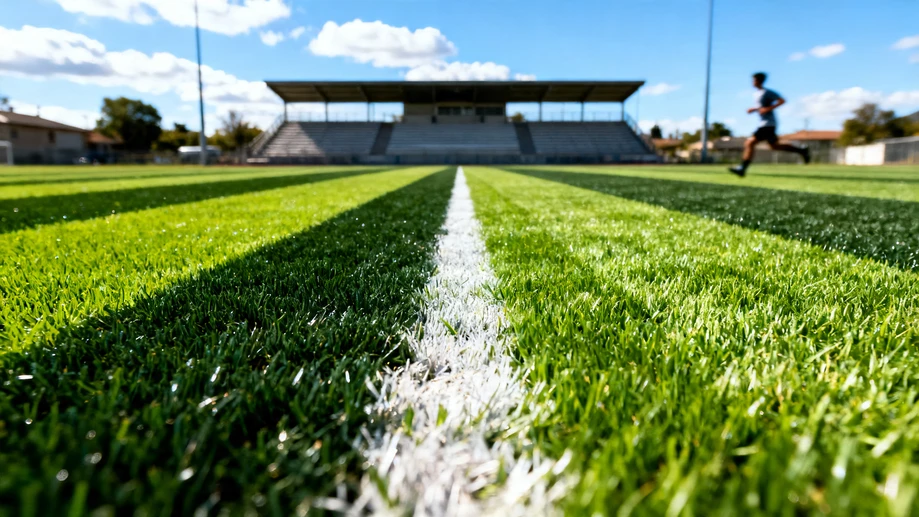
First, consider the grass itself. It's rarely just 'grass'. High-level football pitches often use a specific hybrid blend, like perennial ryegrass mixed with synthetic fibers stitched right into the soil. This isn't just for aesthetics; it creates an incredibly dense, stable surface that holds firm under studs, allows for precise ball roll, and recovers quickly from wear. The cutting pattern – those beautiful stripes – isn't just decorative either. Mowing in different directions alters how light reflects off the blades, making the stripes visible, but more importantly, it subtly affects the ball's speed and direction as it rolls across the changing grain of the grass. A ball rolling against the 'grain' (towards the darker stripe) slows down more than one rolling with it.
Then there's the ground beneath the green. That seemingly simple layer of dirt is a meticulously constructed sandwich. Modern sports fields feature sophisticated drainage systems worthy of civil engineering projects. Beneath the topsoil and grass lies a layer of sharp sand, followed by gravel, all intersected by a network of perforated pipes. This system can drain away thousands of gallons of water per hour, preventing the field from turning into a muddy bog after a downpour. Ever notice how some fields dry out incredibly fast after heavy rain? Thank this hidden plumbing! The composition of the rootzone mix – the soil layer where the grass roots grow – is also crucial. It needs the perfect balance of sand, silt, and clay to retain enough moisture for the grass but drain excess water efficiently and provide stability for athletes.
Hard courts, like those for tennis or basketball, have their own secrets. The color isn't just for show; darker surfaces absorb more heat, making the court warmer, which can slightly increase ball bounce. The texture is vital too. A perfectly smooth concrete finish would be dangerously slippery. Instead, surfaces are often finished with a light broom texture or embedded with tiny silica sand particles while the acrylic coating is wet. This creates microscopic friction points, providing essential grip for rapid stops and starts. The specific acrylic coatings used are also formulated for resilience, UV resistance, and consistent ball response. Even the slight slope of a tennis court (often imperceptible to the eye) is deliberate, ensuring rainwater runs off quickly.
Finally, consider the lines. Those crisp, white boundaries aren't painted on with ordinary paint. They use specialized, heavy-duty, flexible acrylic compounds designed to withstand constant abrasion from shoes and equipment, weather extremes, and frequent cleaning. They need high visibility without being slippery. For night games, some fields incorporate retro-reflective glass beads into the line paint. When stadium lights hit them, these beads bounce the light directly back to the source (like car headlights on road markings), making the lines glow brightly for players and officials, ensuring the game can continue safely and fairly under the floodlights.
So, next time you're cheering from the sidelines or even just walking the dog past the local field, take a closer look. That patch of green or expanse of colored concrete is a silent partner in every game, a testament to hidden science and careful engineering. From the engineered grass blades to the intricate drainage below and the specialized paint on the lines, every element works together to create the perfect, surprising stage for the sports we love. It's not just a field; it's a high-performance machine disguised as a park.