
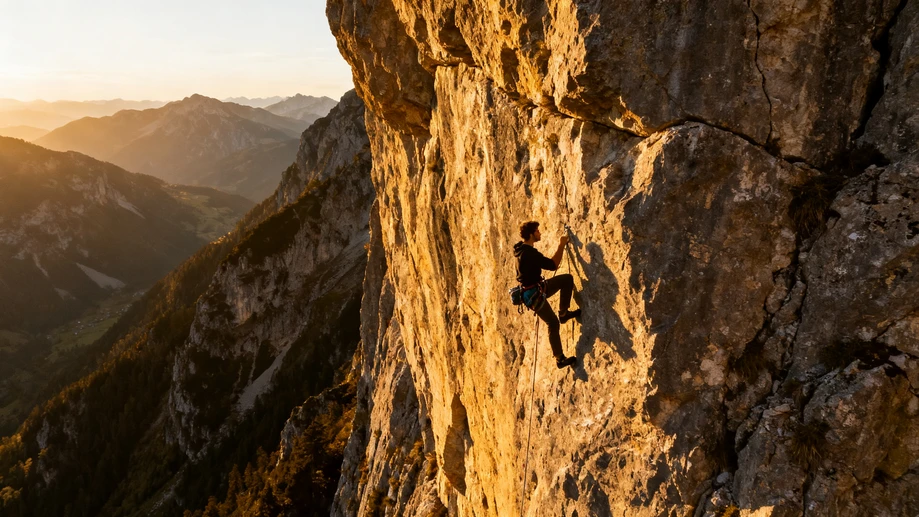
Discover the Vertical World of Rock Climbing
An Exciting Exploration into the Sport That Defies Gravity
Imagine clinging to a sheer rock face, hundreds of feet above the ground, with nothing but your fingertips and a rope keeping you aloft. That's the heart-pounding thrill of rock climbing, a sport that transforms ordinary landscapes into vertical playgrounds. Unlike many activities, climbing isn't just about physical strength—it's a mental chess game where every move requires strategy and focus. From ancient times when humans scaled cliffs for survival to today's urban adventurers tackling indoor walls, this sport has evolved into a global phenomenon. Did you know that the world's tallest indoor climbing wall stands at over 50 meters? Or that climbers often develop "spider senses" for reading rock textures? It's this blend of adrenaline and intellect that hooks millions, making it a perfect escape from daily routines. Whether you're a newbie or a seasoned pro, the vertical world offers endless surprises.
Rock climbing's roots trace back to prehistoric eras, when early humans scaled cliffs to hunt or seek shelter, but it blossomed into a modern sport in the 19th century. In the 1800s, European mountaineers like Edward Whymper pioneered techniques on peaks like the Matterhorn, turning it from a necessity to a passion. Fast forward to today, and climbing has exploded into diverse styles: bouldering involves short, powerful routes on low rocks with crash pads for safety; sport climbing uses pre-placed bolts for protection on taller faces; and traditional climbing demands placing your own gear, testing both skill and courage. The Olympics even added climbing in 2020, showcasing its universal appeal. Fun fact: the first recorded climbing competition was in Russia in 1947, where participants raced up a frozen waterfall. This evolution highlights how climbing has stayed true to its adventurous spirit while embracing innovation.
What makes climbing so addictive? It's not just the rush of conquering heights—it's a full-body workout that sculpts muscles you didn't know existed. Gripping holds engages your forearms, shoulders, and back, while precise footwork builds leg strength and balance. Mentally, it sharpens problem-solving skills as you decode routes, known as "problems" in bouldering or "pitches" in bigger climbs. Studies show regular climbers report lower stress levels and improved focus, thanks to the meditative flow state achieved mid-ascent. Plus, it's social: climbers form tight-knit communities, sharing beta (tips) and cheering each other on. For instance, in popular spots like Yosemite National Park, you'll find groups swapping stories around campfires after a day on El Capitan. This camaraderie turns a solo sport into a shared adventure, proving that gravity-defying fun is best enjoyed with friends.
Safety is paramount in climbing, and modern gear has made it remarkably accessible. Start with a helmet to protect against falling debris and a harness connected to a dynamic rope that stretches to absorb shocks. Carabiners and belay devices act as lifelines, controlled by a partner who manages the rope from below. Beginners should learn from certified instructors, focusing on techniques like "smearing" (using flat feet on rock) or "crimping" (gripping small edges). Indoor gyms offer safe environments to practice, with padded floors and color-coded routes for all levels. Remember the golden rule: always double-check knots and gear before ascending. A humorous anecdote? Many new climbers panic on their first "lead climb," only to realize the fear fades with experience. By prioritizing safety, climbing transforms from a risky dare to an empowering journey.
Ready to try it? Climbing is more inclusive than you think—no need for superhuman strength. Start at a local gym with introductory classes, where friendly staff guide you through basics. As you progress, explore outdoor spots; even city dwellers can find boulders in parks. The benefits extend beyond fitness: it builds confidence, teaches resilience, and connects you with nature. For example, watching a sunset from a cliff top after a successful climb is pure magic. So, grab some chalk for better grip, lace up your shoes, and take that first step upward. The vertical world awaits, promising thrills that ground-level life can't match. Who knows? You might just find your new obsession.