
Did You Know Your Favorite Sports Field Is Secretly a Science Lab?
Unraveling the hidden engineering marvels beneath your sneakers
That lush green soccer pitch or bouncy basketball court isn't just dirt and paint – it's a masterpiece of precision engineering. Modern sports surfaces are designed with NASA-level technology to manipulate physics in athletes' favor. Ever wonder why Wimbledon's grass plays differently from your local park? It starts with soil laboratories analyzing particle distribution down to 0.002 millimeters. Tennis courts use layered polymer cushions that absorb 90% of impact shock, while synthetic turf fields contain over 10 tons of rubber granules for optimal foot traction. The bounce of a basketball actually changes mid-game as wooden floors expand from players' body heat and crowd humidity. Even the color matters: blue tennis courts became popular because they provide the highest contrast against yellow balls for television cameras.
Water management systems beneath fields could put aqueducts to shame. Premier League soccer pitches drain 30,000 liters of water per hour through sand-based root zones and vacuum-assisted pipes. During the 2014 World Cup in Brazil, engineers battled torrential rains with underground heating coils that evaporated puddles before cameras could blink. Meanwhile, baseball groundskeepers choreograph microscopic clay mixtures – 40% sand, 20% silt, 40% clay – to create the perfect slide surface. The most fascinating trick? Some golf greens have subsurface weather stations adjusting irrigation automatically when sensors detect dew formation. These hydraulic symphonies prevent multi-million dollar games from becoming mud wrestling championships.
Temperature alchemy happens right under athletes' feet. Winter sports arenas embed miles of refrigerant tubes maintaining ice within 0.5°C tolerance. But heat manipulation gets wilder: Australian Open courts pump chilled air through porous concrete to keep surfaces below 40°C during heatwaves. Conversely, Russian ice hockey rinks use geothermal warmth beneath the concrete slab to prevent frost heave. The real magic happens at athletics tracks where rubber compounds are engineered to soften at specific temperatures. Olympic tracks are tested at exactly 23°C to guarantee record-breaking bounce – which explains why sprinters compete in evening sessions when conditions are scientifically perfect.
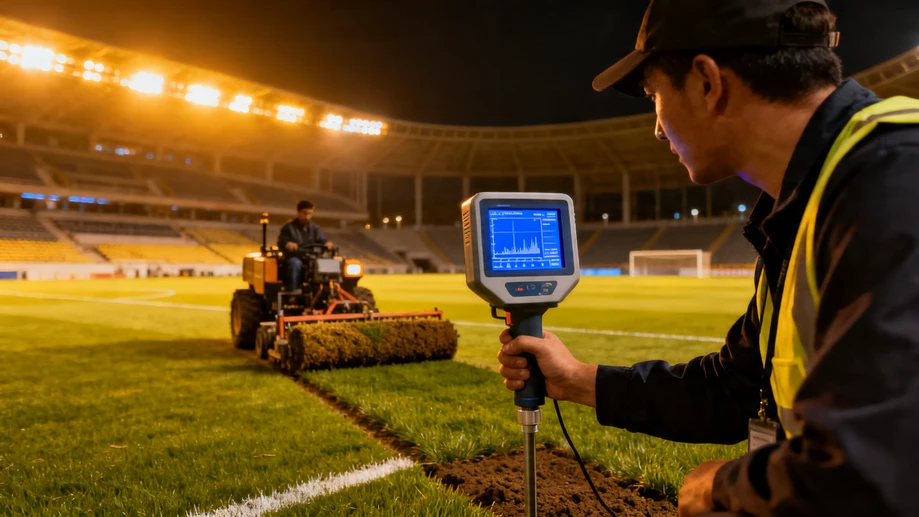
Grass isn't just grass anymore. Modern stadiums grow hybrid turf from 95% natural grass reinforced with 20 million synthetic fibers per field. This cyborg turf withstands 300% more wear than natural grass while feeling identical to players. Each blade is genetically selected: Bermuda grass for heat tolerance, ryegrass for durability, and fescue for shade resistance in enclosed stadiums. Groundskeepers wield GPS-guided mowers cutting at millimeter precision and spectral sensors that detect thirsty patches before human eyes spot discoloration. The most extreme maintenance? English Premier League clubs replace entire pitches 4 times annually at $150,000 per transplant.
Future fields are getting smarter than your phone. Sensors embedded in NBA courts track player movements 500 times per second, while smart soccer balls transmit spin rate and impact force to coaches' tablets. Experimental surfaces in Tokyo use piezoelectric crystals that convert footsteps into electricity – enough to power stadium lights during games. The latest innovation? Phase-change materials in running tracks that absorb heat during daytime and release it as runners' feet compress the surface, creating ideal temperature-controlled rebound. As augmented reality glasses develop, we might soon see digital yard markers projected onto real fields, forever changing how we play and watch sports.